Author: artful words

  • I am your editor,
    not (always) your friend

    Green leaves in glass vaseFriendly and professional. That’s what I am to be in my business. In my interactions with clients and the care I give to my work, I am guided by those two qualities. However, despite my best intentions, it is not always possible for me to embody them.

    Being professional is important to me, in terms both of my proficiency and how I manage my business. While I am confident in my expertise in the areas of editing and writing, I am consistently seeking to learn and improve. That, to me, is a more professional – and realistic – attitude to hold than one that assumes I already know everything and can do it perfectly.

    Another way I aim to be professional is through being honest and respectful in my communication. I am truthful about the nature, scope and timing of the assistance I can offer prospective clients. I am not the right editor for all writers, and I value the relationship between editor and writer too highly to just accept every job that comes my way. When I do enter into arrangements with writers, I keep them informed of my progress with their manuscripts and discuss any concerns either of us may have. If something takes longer than anticipated or is delayed for any reason, I let my clients know.

    When it comes to being friendly, things get a little trickier.

    As anyone who has perused the pages of this website has hopefully found, my tone is approachable and perhaps even affable. I don’t want to seem like a scary, scolding sourpuss who will disapprove of the way you use commas, because that’s not who I am nor what I do. I appreciate creative people and the work they make. I especially admire those who find meaning and joy in their process, as their dedication to their creations is often conveyed to those who encounter them.

    I choose to be friendly when I engage with writers because I know how intimidating it can be to share something as personal as a story or a poem. I am honoured that people trust me with their words and consider it a privilege to develop a rapport with my clients.

    But being professional means that I can’t simply be a friend.

    If I see something in your manuscript that bugs me, I will tell you. If I think you have used a few too many anecdotes or, yes, too many commas, I’ll advise you to excise some. If the bit of your book that you love so dearly somehow doesn’t work, then I will gently propose that you shorten, shift or ditch it.

    My job as your editor is not to approve everything you do. It is to help you refine your writing so that it reaches its readers in the most effective, expressive and meaningful way possible.

    You won’t always agree with my suggestions. You might not always like my advice. And you know what else? I won’t always be right. Nevertheless, the relationship we have when we work together involves me giving you my insight, my ability and my opinions. This can be done courteously, and I hope that is how you perceive it. But it’s not always ‘nice’ and nor is it benign. I want to encourage you to think and make decisions about your writing, regardless of whether you find that comfortable or not.

    Maybe the distinction I am drawing here falls between the adverb and the noun. In other words, it is the difference between being friendly and being a friend. I will be friendly to the extent that I can, but if you ask me, I will not recoil from telling you where and how you can improve.

    Perhaps that is what good friends do. In any case, it is what you can expect from me as a friendly and professional editor.

    Now it’s your turn…

    What characteristics do you value in life and in business? What qualities do you look for in an editor? What matters most to you in the relationship between writer and editor?

  • Designed to delight and to inspire

    Four Ferris wheel carriagesIt is unlikely to come as any surprise to you that I think about words a lot. Not only do I engage with them deeply and daily in my editing work, but I also enjoy pondering their meanings and derivations. Call me curious (or quaint or novel or peculiar), but I am entranced by their cadence and nuance, and intrigued by their implications.

    This is why I took great care in choosing the four words that appear on the homepage of this website. Just in case you missed them, they are considered, creative, precise and persuasive. I believe they convey the qualities that characterise artful writing.

    Considered

    With the poetic exception of spontaneously scribbled love notes, most of the meaningful writing we do is considered. Both our message and its expression are given due thought, as we muse over what we want to say and how best to say it. Even those who write fluently spend time reflecting on the selection and arrangement of their words – and it shows. Artful writing flows.

    Artful writers, moreover, consider not only the words but also their readers. This invokes the concept of respect, which I find is vital in effective writing. Recognising the needs of your audience and showing them consideration requires the same level of contemplation that goes into your writing. Keep them in mind as you write, and already your words will be more artful.

    Creative

    If consideration is the foundation of artful writing, then creativity is the “art” part of it. This is when things become fun, as idiosyncratic phrases, distinctive images and unexpected juxtapositions start sparkling in your sentences. Such flashes of inventiveness are often what stay in our minds when we read fine writing, and they can bring a definite glow to otherwise customary prose.

    For some writers, such creativity is innate, but it can also be developed through practice and attention. Without the gem of creative inspiration, writing may be considered good, but it will never exactly dazzle. Let your imagination play as you write. It may not always deliver what you are seeking, but the effects might surprise you.

    Precise

    Of course, writing can’t only be about play. Creative as they may (and hopefully will) be, the purpose of your words is to communicate meaning. The precision required here involves finding the exact and most apt expression of your message. It demands an adept understanding of language, including a sensitivity to those nuances I mentioned earlier. Artful words are not ambiguous, except when they are deliberately intended to be so. Instead, clarity is crucial in both articulation and form, and this is where editing can be essential. Precision arrives through revision and refinement. Only then can your writing reveal its true – and most artful – power.

    Persuasive

    We’ve all had that wonderful experience of being enraptured by what we read. It occurs when the words persuade us to engage, imagine, believe and perceive. We allow ourselves to be momentarily or more intrinsically transformed. At times your writing might be explicitly persuasive, such as when you advocate for a particular perspective or outcome. But even when your goal is not so obvious, your words still need to persuade.

    It’s a kind of seduction that hints at the more cunning or contrived aspects of being artful – which is not to say that it is manipulative, only strategic. If nothing else, your intention as a writer should be to keep your readers reading. You need to convince them that what you’ve written is worthy of their attention. The approach must be subtle and also respectful. There is a skill to managing this, and that’s why it is a mark of artful writing.

    To delight and to inspire

    As you can see, artful words are not accidental: they are crafted. Writing that is considered, creative, precise and persuasive may take more effort to produce, but it is also more likely to delight and inspire.

    That’s the kind of writing I want to read. It’s the kind I aspire to write too.

    Now it’s your turn…

    What defines artful words for you? What characterises exceptional writing? What qualities or traits do you want to develop in your own written work?

  • Thanks and best wishes in 2016

    Starry sky with the words "thanks and best wishes" overlaid on itI’ve said it before. I’ll say it again. There are many things I love about my job.

    One of the best aspects is the diversity of manuscripts that I get to edit. This year’s assortment included everything from picture books to PhD theses, and from personal development texts to post-apocalyptic epics. There were also meditative coming-of-age stories, quirky short fiction, and philosophical musings on loneliness, fate, geology and love, with a bit of sci-fi thrown in as well.

    Distinct as each of these manuscripts is from any other, what is constant in all of them is the heart that has gone into their creation. Some of the texts I’ve edited this year have been deeply personal, and all contain a powerful sincerity. The courage each writer has shown in expressing and sharing these truths has been a privilege to witness.

    This leads me to another wonderful quality of my job. I’m fortunate to have some incredible clients, who are not only amazing and dedicated writers but simply lovely people as well. This year, a number of them experienced the joy of becoming published authors for the first time. Others successfully completed their PhDs, entered their stories into competitions, saw their novels move closer to completion, realised their dreams of creating a print magazine, and were offered multi-book publishing deals.

    I am grateful to have been invited to share in these journeys, to support my clients in their endeavours, and to celebrate their achievements with them.

    Already, the new year is brimming with more exciting editing projects. I’m honoured to be involved in every one of these, and I’m looking forward to seeing what else will evolve as the months of 2017 unfold.

    For now, I want to give my thanks and best wishes to all my clients, all my readers and all my colleagues. You are the ones who make this whole thing matter, and it means a lot to me.

    As the year ends, I hope you find time both to reflect and to imagine. The past twelve months are sure to have brought pleasures, regrets, lessons and remembrances for every one of us. With the new year soon to begin, my hope is that we will all enjoy new adventures, new discoveries and the delightful surprises that life offers us.

    Be well, my friends. And thanks for everything.

    Now it’s your turn…

    What are your highlights of 2016, writing or otherwise? What plans, projects and possibilities are you contemplating for 2017? What are you giving thanks for now?

  • Say what? Editing spoken texts

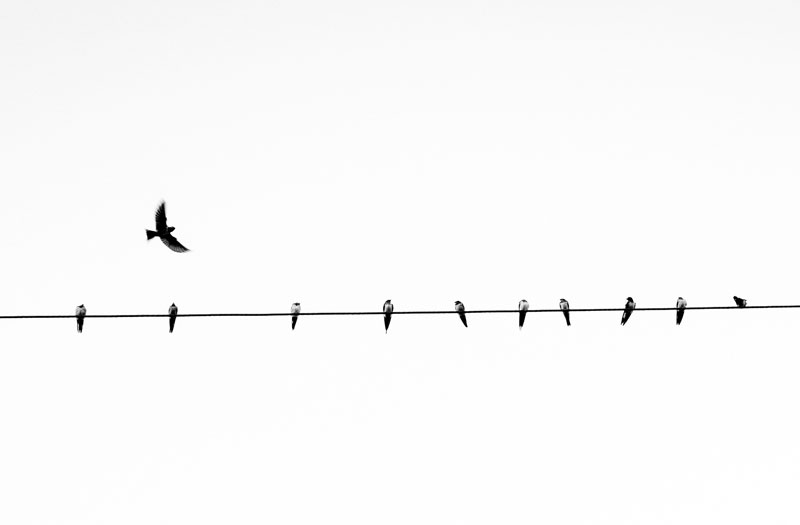
    Birds perched on a wire with one in flightI mean because the thing is because um like well you know how we don’t people don’t like talk like we write we sort of you know oh I’m going off over here and then I’m over here something else and it all kind of runs together whatever and then kind of because what it is is that you talk as you think you don’t really think about it you just well maybe sometimes you do but most of the time it’s just say it you don’t don’t think about it you know and I guess that maybe that kind of makes it a bit hard

    Well, yes, actually. It does make it a bit hard.

    If you’ve ever tried to turn spoken utterances into written text, then you will know it is not as simple as it sounds. The transformation involves a number of steps, usually beginning with transcription. Already this can present difficulties, as there are different ways to transcribe audio files. Even in their raw form, some transcripts require an exacting accuracy, while others can afford more flexibility.

    The presentation of the transcription can vary as well, depending on who does it and for what purpose. Linguistic transcription, for instance, is sprinkled with cryptic symbols that signify all those meaningful parts of speech that are not words. These include, entertainingly enough, the use of the “@” symbol to indicate laughter, while the “#” symbol is applied to utterances that are deemed unintelligible or uncertain. (And suddenly hashtags make way more sense to me.)

    Where things get interesting from an editor’s perspective is after the words are turned from speech into script. This is often when they need to be emended – whether slightly or significantly – to ensure they appear in an orderly form for their audience.

    As the sample text above endeavours to explain, we do not speak in neatly punctuated sentences. We hedge and garble, we pivot and maunder. We cram our conversation with all manner of fillers, with the result that much of what we say isn’t really what we mean.

    The editor’s task is to tidy up the clutter of our spoken discourse and make our utterances more coherent. Or is it?

    Quiz a scribble of editors about this and you’ll get a range of responses, shared with varying degrees of vehemence. Some will insist that no changes can be made to the text. None. Every “er”, “um”, “like” and “you know” must be retained in their original form to avoid any risk of misrepresentation. Others might argue that the inclusion of such phrases is disrespectful to the speaker, who would surely prefer to seem lucid and intelligent in print. You’ll also find editors who will cheerfully change the odd spoken word or two in order to bend a sentence into a correct grammatical form. Their colleagues may do so too, but more warily.

    Depending on the context, any and all of these approaches could be appropriate. In determining what to do, editors must take into consideration the preferences of their clients, the needs of the readership and the nature of the publication, as well as their own inclination. In some cases, a verbatim presentation of the speech as spoken is the only ethical option. Yet even here, complexity arises, as the words must still be shaped into written discourse. At the very least, this involves the application of some punctuation, and even the most benign of these marks can change the interpretation of a phrase.

    One illustration of this involves the words “you know”. These are often heard in speech, but can prove problematic to punctuate. Note the difference in the following:

    It can be an interesting process, you know? It’s not always as obvious as it seems.
    It can be an interesting process. You know, it’s not always as obvious as it seems.
    It can be an interesting process. You know it’s not always as obvious as it seems.

    The absence or addition of the question mark, comma and full stop alters the nuance of this utterance. In the first version, the words “you know” are used to seek confirmation of understanding or agreement. In the second, they seem to express a reflective insight, while in the third they serve as an instructive or even didactic mechanism. While the overall meaning of the remark may be similar in all three, the mood decidedly is not.

    Without hearing the intonation of the speaker, it would be difficult to determine which is the most exact rendition. The answer may be apparent in the transcription itself, but transcribers do not always add all relevant textual details. Editors therefore need to be prudent when placing punctuation in the written version of a spoken source. If necessary, they should check for accuracy with the client, transcriber or speaker.

    Ellipses can be interesting in this regard too. Otherwise known as those three little dots (“…”), they are used to indicate omissions, such as when words are left out of a direct quotation. You may also have seen them beetling off the end of a sentence, as if to show uncertainty or an unfinished thought or an idea that just kind of trails away… A bit like that, really. They can be troublesome when present in the written account of a spoken text because they could be interpreted as serving either of their functions. Again, it’s best that editors confirm their usage is correct.

    One other piece of punctuation to mention is square brackets. These are used in cases of of editorial insertion and contain something that did not appear in the original. Instances of this may include introducing a person’s full name in place of a personal pronoun or adding a word for the purposes of precision or grammatical clarity.

    This brings us to the question of how to edit the rather garbled passage at the start of this piece. If I were editing the text as a quotation in an article and had consent to make changes, I may do something like this:
    People don’t talk like we write. We sort of go off over here and then over here to something else, and it all kind of runs together. You talk as you think, and you don’t really think about it. Well, maybe sometimes you do, but most of the time you just say it, and I guess that kind of makes it a bit hard.

    If I needed to maintain a closer adherence to the original utterance, it might look like this:
    I mean, the thing is, well, you know how we don’t, people don’t, like, talk like we write. We sort of, you know, ‘Oh, I’m going off over here and then I’m over here [to] something else’, and it all kind of runs together, whatever. And what it is is that you talk as you think. You don’t really think about it, you just – well maybe sometimes you do – but most of the time, [you] just say it. You don’t think about it, you know? And I guess that maybe that kind of makes it a bit hard.

    It is worthwhile reflecting on the difference that would be made in the above example if a question mark rather than a full stop ended the first sentence. As it is, the phrase “you know how we don’t” appears as more of a definitive statement than a query. Similarly, a semicolon could be used instead of the full stop after “talk as you think”, and a full stop could replace the comma after “don’t really think about it”. Would that change the meaning or emphasis at all?

    One other oddity to note is the repeated “is” in the third sentence. This known as a double copula, a reduplicative copula, a ‘double is’ (sometimes ‘double-is’) or, neatly, as an ‘isis’. Debate surrounds whether or not these can be judged as acceptable grammatical constructions, while a whole separate squabble circles around how to punctuate them. If I encountered one of these in writing, I would most likely try to revise it. They are yet another illustration of the issues that can emerge when editing the written form of spoken words.

    This discussion has raised a number of these conundrums, but there are of course many more for editors to ponder and resolve. We have also dipped into some (hopefully edifying) digressions here, all of which bear some relevance to the matter at hand.

    The reality is that when it comes to editing texts that derive from speech, there’s quite a bit to consider. You know?

    Now it’s your turn…

    What challenges have you faced when turning speech into text? Have you ever had your spoken words edited by someone else? What was that experience like? And just between us, you did find those little diversions about linguistic transcription, ellipses and reduplicative copula interesting, didn’t you?

  • The pleasures of editing poetry

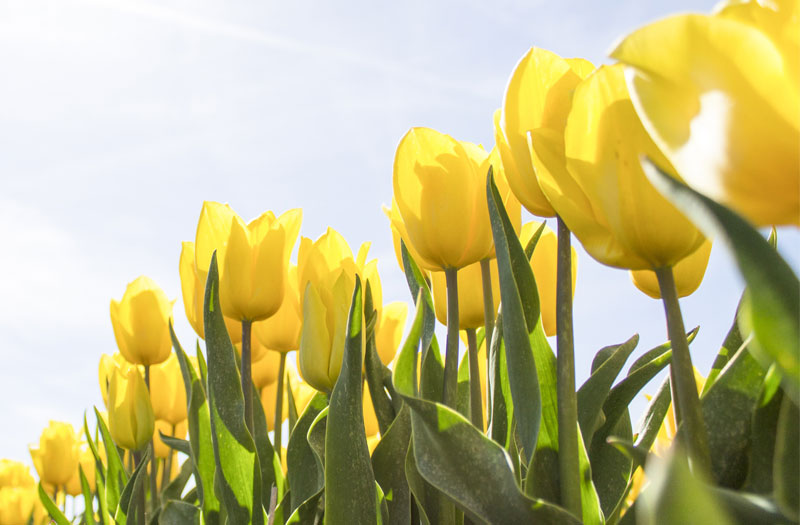
    Brilliant yellow tulips in sunshineOne of the wonderful things about my job is the opportunity I have to work with authors in a variety of genres. From novels to memoirs to academic texts, each style of writing presents a different challenge, and although I wouldn’t like to pick a favourite, I do find a definite pleasure in editing poetry.

    There is something in the rhythm and precision of a poem that really appeals to me, both as a reader and an editor. At its best, poetry presents a new or skewed vision of the world we know, inviting us to encounter the familiar in wondrous ways. It does this partly by playing with language – exploring it, inciting it and ultimately enlivening it – and that’s what makes it so intriguing to edit.

    Regardless of the material before me, my aim as an editor is always to ensure the text is clear, consistent and correct. Crucial to my work is an ability to see what needs to be altered and to identify what could be improved. I am confident in my understanding of how language works and will happily make changes to grammar, punctuation and spelling in most styles of writing. I will also rephrase sentences as necessary, although the writer may decide whether to accept these revisions or not.

    When it comes to poetry, however, my approach is different. In a poem, the usual rules of form and even meaning may be set aside. Perhaps more so than other kinds of writing, poetry is idiosyncratic. It can be very personal as well, and it is for these reasons that I edit it with a greater sense of deference.

    In most texts, I make changes. With poetry, I offer observations.

    These observations could relate to the tone or imagery of the poem. They may question the position of a line break or highlight a shift in cadence. I could offer you my perception of the metaphor you are using, or encourage you to be braver and take your poem even further. Such reflections are made as comments on your document, and any changes are usually accompanied by an explanation.

    With all my clients, I am happy to discuss my corrections and suggestions. I hold strongly to the value of shared respect between author and editor. It is a reciprocal process, a dance of response; yet here again, the sensibility differs a little when I work with a poet.

    Editing poetry involves being guided more by instinct. I consider my impressions and then share them with the poet, who can in turn affirm or adjust the poem. It is a distinct way of thinking and of engaging with a text, and it fascinates me.

    Perhaps if I were a poet myself, I could express the sense of it more cogently. For now, I will continue to search for the words to convey that allure, and I’ll welcome the chance to do more of this kind of editing.

    Now it’s your turn…

    Have you ever had your poetry edited? What was the experience like for you? What matters to you when an editor engages with your poems?

  • “This… because… and… but…”:
    A clever and flexible structure

    Coloured blocks of fabric sewn into an appealing structureAs anyone with a even passing awareness of who Maria Popova is and what she does will know, there is much to admire about her. She is the one-woman wonder behind Brainpickings, the the extraordinary website which offers readers an interlaced array of articles on life, love, art, culture, literature, philosophy, psychology, science and every intriguing realm in between.
    To sustain her dedication to reading and writing for the site, Maria brings a crystalline discipline to her days, and a similar appreciation of structure can be found in her approach to her articles. In an interview with Georgie Okell for Radio Headspace, she reflected on how these have evolved from originally being short and expository paragraphs to the longer and more considered essays that grace the pages of Brainpickings these days.

    Here’s how Maria describes it…

    When I started Brainpickings, I was doing at first something like three articles a week and they were not really articles. They were very curatorial. They were one little paragraph about something that was interesting, and over time they became longer and longer. So they changed from “This…” to “This… because…” to “This… because… and…”, and so I’d relate it to other relevant things, and over time, “This… because… and… but…”, so I’d counterargue the point and kind of play devil’s advocate and provide multiple perspectives on the subject, and the consequence was that my articles now on average are probably 1500 words.

    “This… because… and… but…”. As a structure for writing, it is both clever and flexible.

    “This” tells your reader the topic of your treatise. Easy as that. It is followed by “because”, which could offer further explanation of your central theme or may allow you to outline the reasons why you care about it and why you believe your readers should too.

    The “and” part of this framework affords a couple of options too. One is to add a further enticing piece of information to your explanation, or you could, like Maria, link it with something that is related in some way. (A clever writer can almost always find a connection between disparate ideas. At the very least, it’s fun to try.) In more persuasive styles of writing, the “and” can be used to introduce an additional element of your argument.

    Then we come to the “but”, and it’s here that things can get interesting. The word “but” when used as a conjunction signals contrast, exception, contradiction or exclusion. It often evokes an opposing notion, so why would writers seek to throw such disruption into their prose?

    Sometimes, the presentation of a differing perspective can be used to strengthen an argument through refuting the conflicting point of view. Yet in the case of Maria Popova’s essays, which she says are written for her own edification, there is no need to persuade in this way. Rather, counterargument – or perhaps counterpoint is a better term to use here – can be a means for extending one’s thinking into new directions. It may also demonstrate sophistication by acknowledging limitations. This is how I see the final part of the “this… because… and… but…” structure working in the articles on Brainpickings.

    The pliancy of the whole design is apparent even from this brief synopsis of it.

    With the exception of the first element, which needs to state the topic, each of the others can be shaped to serve an appropriate purpose. Even better, the whole thing can be applied at a sentence, paragraph and full text level.

    For instance, a sentence structured on this sequence might read as: “This is a useful strategy to use in your writing because it provides a neat technique for linking ideas and saves you from wondering what to put next but still allows you generous scope to adapt it as necessary.”

    See what I did with that last bit?

    Instead of using the “but” to mount a counterargument, in this case I employed it to add another point to my claim, thus demonstrating again the flexibility of the framework. If I were to propose a limitation for this structure, it would be that it is more relevant to non-fiction than fiction. It also requires a certain subtlety in its application in order to avoid having your text appear too uniform. Robust though this format may be, not every sentence nor every paragraph needs to adopt it unvaryingly. Even so, it’s not a bad place to start for a first draft.

    I could go on about the potential implications and artful variations of this useful structure, but I’d rather let you explore it for yourself.

    As for the fascinatingly labyrinthine Brainpickings website, it really is a case of “but wait, there’s more…” because, thanks to Maria, there always is. And long may it remain so.

    Now it’s your turn…

    Do you read Brainpickings? What treasures have you discovered there? What systems or structures do you use to draft your documents and guide your writing?

  • The time it takes – and why it may be longer than you might think

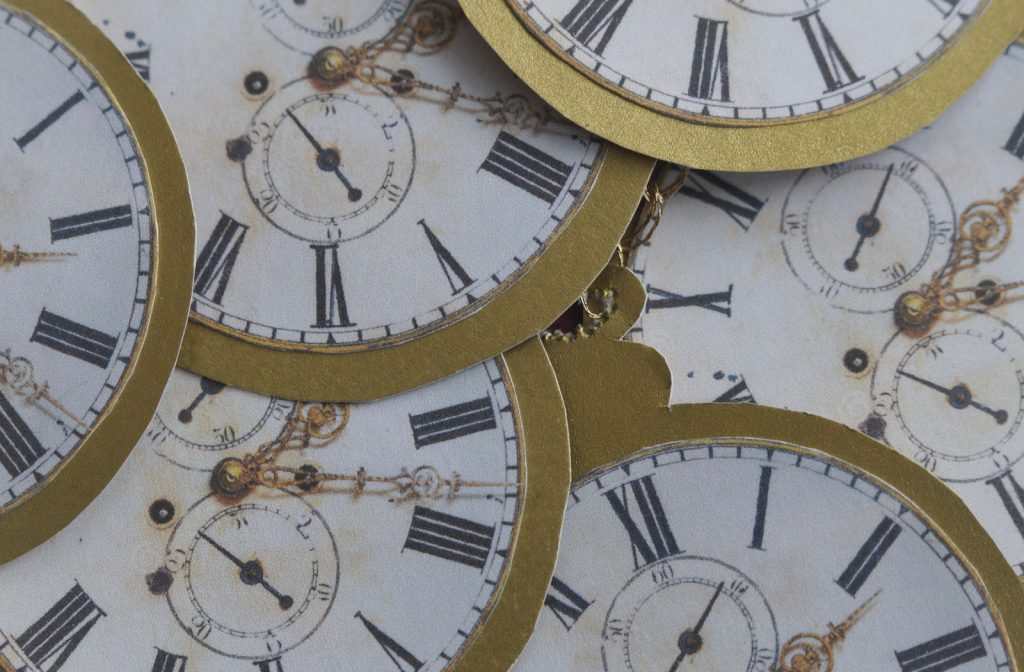
    Close up image of cardboard clock facesFirst, you have to live.

    Before you can hatch an plot, be struck by inspiration or pursue that yearning to share your ideas with the world, you need to spend some time being alive. You have to discover who you are, how you think, and how language and vision and imagination work. All of that takes time. At some point, you need to decide what form your insight or the story you dreamed up might take, and whether or not you are prepared to create it.

    Then, you need to write.

    Chances are you don’t need me to tell you that can take a while too, but just in case you were dwelling in any doubt or delusion, it’s true. Writing takes time. So do redrafting, refining and revising, not to mention revisiting the original premise, changing direction completely, realising that you’ve been writing a whole other thing entirely, giving it up, thinking it over, coming back to it later, trying it from a different angle, cutting it in half or doubling its size, turning it inside down and upside out, and writing, writing, writing, until at last you can hear it singing.

    And that’s not even counting the procrastinating.

    It takes time.

    Finally, it’s done. But it isn’t, of course, because that’s when (if you’re smart) you get it edited, and yes, that takes time too. It may take you a while to find the right editor for your words, and then you might need to wait until you can work with that person. The editing itself needs time and possibly more of it than you first expect.

    You might think you are ready to go, but your editor could suggest there is structural work to be done. Sometimes more than one round of editing is required. Whole chapters may be missing or unnecessary. Ideas might need more explanation, examples or illustrations.

    It takes time to sort all of that out and it has to happen before any further editing can occur. And you’re the author, don’t forget. That means you need to check through and approve or refuse every suggestion and correction your editor makes. This can take a while and could even lead to more revisions requiring more editing which also needs approval from you.

    It all takes time.

    At last, you have your final draft and you’re ready to publish. Guess what? Time. You’ll be needing more of it. Whether you opt for print publication, create an ebook or have a deadline to meet, your document has to be formatted. Other experts may need to contribute their skills. There’s cover art and typesetting to be arranged, and don’t forget that proofreading is a separate step in the process.

    The message is simple, my friends. Writing, editing and publishing all take time and probably more of it than you think.

    Sure, each of these stages can be rushed, but why do that if you care? And if you don’t care, why do them at all?

    It’s at this point you might expect me to spin you that line about how everything worthwhile takes time. That may be true in a lot of cases, but some of the most amazing and enduring things that have ever happened did so in only a few days or in a minute or in an instant. Clichés are not always correct.

    There are authors out there who are disciplined and prolific. They write quickly and confidently and very productively. You can also find editors who will finish jobs with aplomb in squeakily tight timelines. Even publishing itself is becoming an ever more expedient process, but sometimes, sometimes it’s not quite as quick as you might like.

    And some good things do take time.

    I’ll happily tell you that I’m not the fastest editor out there, but I’m thorough and I care. Maybe more than most people, I know that time cannot be vanquished. It happens at its own pace and being in the flow of it is easier than constantly wrestling with it.

    By the time your work reaches me, you are usually beyond eager to get it out there and into the hands of its readers. I understand that and I want to help. But sometimes it takes time.

    How about we agree to give your words the respect they deserve? Let’s recognise that time is one factor at play, but quality matters more to me than speed and I hope it does to you as well. It may be that your journey as a writer from first word to finished product takes longer than you expect, but that’s ok.

    While that time continues to flow, we can all keep on living, learning and writing some more.

    Now it’s your turn…

    What expectations or experience do you have of the time it takes to write, edit and publish? Which bits go fast for you and which ones slow? What advice would you give to others about cultivating patience when creating a book or other significant document?

  • A word about adverbs

    A single dandelion against a sparkling green backgroundI use them often, as you may have noticed. Adverbs. They’re those nifty little words that, depending on your perspective, either give precision to your prose or needlessly clutter up the page. Some writers rail against them. (Hello, Stephen King.) Others dispense them with delicious effect. (Oh, hi, Stephen Fry.) In my view, adverbs are elements of language that can, like all others, add style to your writing. The key is knowing how and when to employ them.

    You can generally recognise adverbs by the suffix ‘-ly’ that is appended to them, although it is important to note that not all words ending in –ly are adverbs and not all adverbs end in –ly. Their name indicates that their role is to ‘add’ something to a verb, although they can be used to modify other parts of speech too. This includes:

    • adjectives (such as utterly fascinating, quite delightful)
    • other adverbs (very cleverly, unreasonably often)
    • clauses or sentences (Potentially, this is getting a bit technical).

    Adverbs modify or specify such things as:

    • Time (soon, later, afterwards)
    • Place (nearby, overhead, beneath)
    • Manner (exquisitely, unwillingly, predictably)
    • Degree (mildly, intensely, extremely)
    • Frequency (often, regularly, infrequently)
    • Probability (likely, possibly, maybe)
    • Emphasis (very, quite, positively)
    • Duration (briefly, interminably, always).

    There are also a cluster of interrogative adverbs whose purpose is to form questions relating to time (when), place (where), reason (why) and manner (how). Fortunately, you don’t need to remember all of this in order to use adverbs effectively. (See what I did there?)

    Arguments against the use of adverbs invoke an apparent ineptness on the part of the writer, who may be depending on them to carry a weight of meaning and emotion that might otherwise be conveyed through sturdier words like verbs and nouns. It is true that excessive use of them can be a lazy way to “tell” readers what is happening and how they should feel about it, rather than “showing” or guiding them to this knowledge. Yet equally, one of the qualities of good writing is that it persuades us.

    Through engaging with well chosen words, we become willing to believe in imagined worlds, innovative ideas, dramatic events and exhilarating theories. Words do have power, and writers are entitled to use all the linguistic gifts available to them in order to express their message in the best way they can. I believe this includes adverbs, despite what other experts might say.

    Sometimes the touch of specificity given by an adverb is necessary to deliver an exact meaning or image. At other times, the vehemence of a writer’s feelings can be concentrated through a few rigorous adverbs. Then there is the outright glee of scattering them joyfully, exuberantly, willingly and wantonly, for the simple reason that words are fun.

    Adverbs can make your writing more lively, provided that you use them wisely.

    Not every verb requires modification, and nor does every sentence need an adverbial adornment. To develop your discernment, learn to identify adverbs both in your own writing and in the material you read. Consider the effect they have and try rephrasing various sentences that contain adverbs while still retaining the meaning. You can then decide which version better expresses the idea, image or emotion in question and choose whether to use them or not.

    It really comes down to a matter of taste. Adverbs suit the style of some writers but they hang inelegantly in the text of others. There is no need to shun them, and none to include them if you’d rather not. Either way, it’s up to you. Entirely and completely.

    Whatever your preference, just remember as with all your words to use them artfully.

    Now it’s your turn…

    Do you have an affection for or an aversion to adverbs? Would you say they add or detract from the writing you read? Are there any you find particularly appealing? Feel free to share in the comments below.

    Sources consulted for this article include The Little Green Grammar Book by Mark Tredinnick (University of New South Wales Press, 2008), A Short Guide to Traditional Grammar (2nd edition) by J.R. Bernard (Oxford University Press, 1993) and Dictionary of Grammar (Redwood Editions, 1998).

  • The results of unexpectedness: Thoughts on ‘Life While-You-Wait’

    Rays of sunlight streaming through treesSometimes words find us in unexpected ways, falling into our minds like light piercing through the gloom. It happened like that with this poem, which was shared with me by a dear friend. Now I am sharing it with you.

    Life While-You-Wait.
    Performance without rehearsal.
    Body without alterations.
    Head without premeditation.

    I know nothing of the role I play.
    I only know it’s mine. I can’t exchange it.

    I have to guess on the spot
    just what this play’s all about.

    Ill-prepared for the privilege of living,
    I can barely keep up with the pace that the action demands.
    I improvise, although I loathe improvisation.
    I trip at every step over my own ignorance.
    I can’t conceal my hayseed manners.
    My instincts are for happy histrionics.
    Stage fright makes excuses for me, which humiliate me more.
    Extenuating circumstances strike me as cruel.

    Words and impulses you can’t take back,
    stars you’ll never get counted,
    your character like a raincoat you button on the run —
    the pitiful results of all this unexpectedness.

    If only I could just rehearse one Wednesday in advance,
    or repeat a single Thursday that has passed!
    But here comes Friday with a script I haven’t seen.
    Is it fair, I ask
    (my voice a little hoarse,
    since I couldn’t even clear my throat offstage).

    You’d be wrong to think that it’s just a slapdash quiz
    taken in makeshift accommodations. Oh no.
    I’m standing on the set and I see how strong it is.
    The props are surprisingly precise.
    The machine rotating the stage has been around even longer.
    The farthest galaxies have been turned on.
    Oh no, there’s no question, this must be the premiere.
    And whatever I do
    will become forever what I’ve done.

    Before these lines arrived in my life, I knew little of the poet and Nobel Laureate Wisława Szymborska. I have since peeked briefly into her world and am keen to explore it more. This poem, ‘Life While-You-Wait’, has been translated from the original Polish by Clare Cavanagh and Stanislaw Barańczak. If you enjoyed it, you may wish to listen to Amanda Palmer reading it on Brainpickings.org.

    For me, the poem offers an interesting mix of warning and reassurance. “Ill-prepared” as the speaker may be, there is an acknowledgement here of living as a privilege. The role to be played, although unknown, is owned, and guessing “on the spot / just what this play’s all about” is what each of us must do in our own ungainly way. We go along, improvising unwillingly and tripping over our own ignorance, much as we do when writing a first draft. The difference is that these “Words and impulses” can not be edited or taken back, and “the pitiful results of all this unexpectedness” become the stuff of which our lives consist.

    Fair or not, we can neither rehearse nor repeat a single day. With the set so strong, the props so precise and even the “farthest galaxies” alight, there can be “no question”, as the poet insists, that “this must be the premiere”. Life is indeed what happens while we wait, hoping and holding out for the ‘right’ moment and a sense of readiness that will never come.

    We do not get to see the script for Friday ahead of time, but we can choose either to fear or to embrace that fact. If we cannot exchange the role we play, then we must simply act it as best we can. Although doubtless riddled with “happy histrionics” and “hayseed manners”, my own performance is made up of what I have managed to scratch together. Like you, “whatever I do / will become forever what I’ve done.”

    These final lines linger in the mind, but whether they are encouraging or devastating, reprimand or reminder, it is up to you to decide.

    Now it’s your turn…

    What are your thoughts about this poem? Which images or lines reach you most deeply? What poems have you felt compelled to share?

  • Exploring, experimenting, expressing: The value of journaling for writers

    Stack of journals, tied with stringI’ll admit I may be a bit biased about this. For almost six years now, since July 2010, I have written every day in my journal. I didn’t necessarily intend for this to happen, and nor do I claim it as some special achievement. It does, however, demonstrate the value I place on journaling. Somewhere along the way, it has become essential to me. I cannot imagine my life without writing about it and I do not know who I would be if I did not write.
    The rewards of journaling are plentiful and varied, offering everything from personal development and healing to stress reduction and a scrupulous reckoning of life. For writers in particular, keeping a journal has definite benefits. Many eminent authors, including Virginia Woolf, Sylvia Plath, John Steinbeck, Anaïs Nin and Henry David Thoreau, are well known as dedicated diarists. Despite being originally penned in private, the published versions of their journals afford interesting glimpses into the writing life and the minds behind some great works of literature.

    Whether or not we aspire to the heights reached by these authors, journaling can be useful to all of us as writers. Among its gifts are exploration, experimentation and expression.

    Exploration

    The times we write about may be difficult or delightful. In either case, journaling allows us to explore our experience. Collected and contained in a journal, our perceptions, reflections and questions can be examined more thoughtfully. We can begin to recognise aspects of our personality and become more aware of our preferences, both as people and as writers. Fascinations and frustrations are revealed in the words we pour onto the pages of our journals, sometimes resulting in insights and sometimes not.

    Many of us learn who we are through what we write.

    This is an important aspect of journaling, yet our explorations can and should extend beyond ourselves. The ability to observe and describe the world around us can be enriched through journal writing. People who write journals may find themselves developing an attitude of curiosity towards circumstances and events, with impressions that are usually fleeting finding form in words. In this way, a journal can be a safe space in which to refine our awareness, deepen our discernment and cultivate our craft.

    Experimentation

    One of the most significant distinctions between journaling and other forms of writing is that a journal is usually kept confidential. Released from the pressure of writing for an anticipated reader, we are free to frolic, make mistakes, experiment and invent. The words in our journals are for our eyes only. This means we can write whatever truth or fiction we like in whatever form we desire. We can give ourselves the rare grace of writing without judgement or expectation.

    What we put in our journal doesn’t have to be ‘good’. There is no need for it to be grammatical or even comprehensible. The act of writing itself and a readiness to engage in the process is what matters, rather than any notion of a finished product.

    In your journal, you can try on different styles, test out techniques, set yourself challenges, and delve into discomfort if you wish. No one is watching. Writing purely and playfully for yourself allows you appreciate the writer you are, but it also lets you apprehend the kind of writer you might become. Most likely, that exists somewhere beyond your current vision, but you may discover hints of it through your journaling practice.

    Expression

    The gem at the heart of journaling is expression. The opportunity to vent or reflect, rejoice or recriminate, describe or define, and to enclose our own vital but otherwise incoherent experiences in words is truly invaluable. By letting out our thoughts and feelings, we can (perhaps) also let them go and clear some space inside. A journal can be a confidante, a mirror, a companion and a guide. Into it we can write our deepest truths and our truest depths, expressing ourselves fully, openly, intimately and creatively.

    I believe we all need a place to do this, and that writers especially require a private space to inscribe the words that converge in their minds. This capacity to translate all the chaos and splendour of life into language through journaling makes us, in my view, not only better writers, but better human beings too.

    Now it’s your turn…

    Do you write a journal? What benefits and challenges have you found in your journaling practice? What have you learned about writing or yourself through journaling?

  • An act of faith: Why language matters (even when it is inadequate)

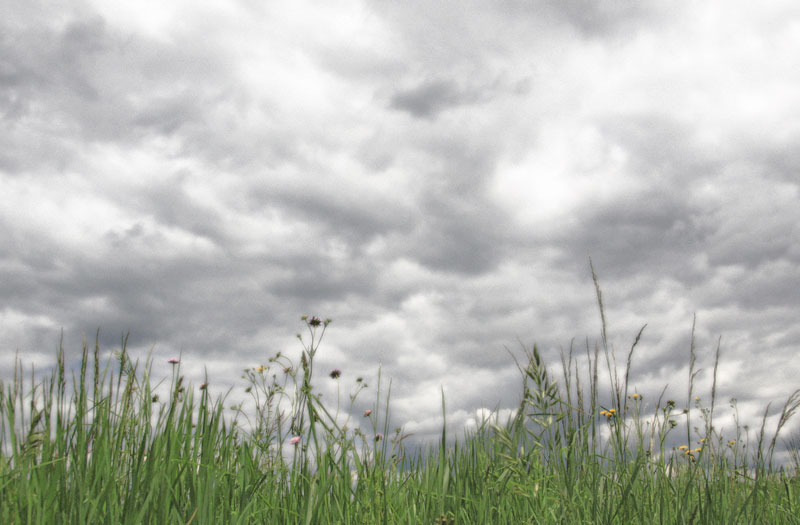
    Green grass against a grey skyFor all its beauty, complexity and nuance, language is at times sadly inadequate. Certain experiences fall beyond words. They render us inarticulate, unstitching us from meaning and annihilating our ability to share the messy reality of our lives.
    Depression is one such experience.

    In a talk given at last year’s Hay Festival and later broadcast on the BBC, author Matt Haig spoke of the way depression, and its vicious accomplice anxiety, can detach us from the world, and more critically from ourselves. This is what happened to him. At the age of 24, his world splintered and disintegrated as he tumbled into the precarious realms of mental illness.

    “At my lowest point, in February 2000,” he says, “I stopped believing in words. Until then, I hadn’t realised that the act of using language is an act of faith, but it is.”

    Let’s just think about that for a moment. What does this mean?

    Faith, in one definition, may be considered as the belief in things not seen without evidence that they genuinely exist. Depression itself is a thing that is largely unseen, not only because it emanates deep in the secretive domains of our bodies and minds, but also as a result of society’s continued difficulty in adequately acknowledging it. When we are depressed, moreover, we are often conscious of a lack of recognition, either from those around us or through the unsettling experience of becoming strangers to ourselves.

    Words, too, are in many ways intangible. Sure, we can see them written on the page and hear when they are spoken, but words are only ever symbolic. They represent the elements of our lives without actually being them. Yet it is through words that we are able to connect, express, explain, delight, beguile, advise, entertain and learn.

    Such acts are a profound part of our humanity, but conditions like depression can distance us from their significance.

    As Matt Haig says, “You have to believe there is a point of there being words and that they can offer real meaning. Normally, this belief is taken for granted. But when your mind crumbles to dust, everything you thought you knew suddenly becomes something to question.”

    Pitched into such doubt, it is ironically words themselves that may offer some salvation. At least, that is how it was for Matt. First through reading and later through writing words, he gradually became more able to manage his illness. In his case, it was fiction that provided a kind of map.

    “If you think about what a story is in its most basic form,” he explains, “it is change. A character starts somewhere, either physically or psychologically, and they end up somewhere else. When you are depressed, you feel like you are trapped inside an eternal, unchanging moment.

    “Stories convince us that things do change.
    They unfix us or allow us to believe we can become unfixed.”

    A belief in the possibility change can be problematic for those who are enclosed in the unforgiving grip of mental illness. The reality that was previously known gets shattered so utterly that suspicion is cast on all former certainties, as well as all future prospects. Where in such wreckage can one even begin to discover the courage or means to rebuild?

    For some, one aspect of that answer may be words.

    Part of their magic is that they allow us to take our minds elsewhere – into different times, other places, new perspectives. They give us an awareness of alternative ways of being, which may be kinder, braver or more steadfast than we can otherwise manage to be.

    However faltering or insufficient, words also make external what might otherwise be an entirely internal experience, thus affording us the potential for connection – whether we ourselves are the ones drenched in anguish or stand as those willing to bear witness.

    This is not to say that it is easy. Nothing with depression is easy. Nor can words alone provide an entire solution. But for some people, they might help.

    In his book Reasons to Stay Alive, Matt Haig writes that: “Words – spoken or written – are what connect us to the world, and so speaking about it to people, and writing about this stuff, helps connect us to each other, and to our true selves.”

    Through the small but valiant act of using words and making these vital connections, we may start to assemble reality again. Whether by writing or reading, we are granted the chance to leave behind a certain kind of mind so that we may create another, “similar but better, nearby to the old one but with firmer foundations, and very often a better view.”

    Or so I hope.

    If ever, like Matt, you stop believing in words, I encourage you to do whatever you must to find your faith in them again. Begin, if necessary, with the words of others. Read books and poems. Listen to speeches and conversations. Then, when you can, scratch words into a journal and voice your truth to whoever will listen. Allow yourself to imagine the possibility of change.

    Eventually, maybe, with patience and persistence, you will learn to trust in the wonder of language and in yourself again.

    Now it’s your turn…

    Do Matt’s words resonate with you? To which writers or texts do you turn in harsh times? How do words help you?

  • Your fast and friendly guide to different kinds of editing

    A bunch of coloured balloonsOver the last few months, I have published a number of articles about different kinds of editing and how they may be helpful to you. I am now collating this information into a quick guide so you can get a better sense of what sort of editing your manuscript requires.

    While other editors may use alternate names or add further distinctions, I consider editing in three main ways. These are developmental editing, structural editing and copyediting.

    Developmental editing

    What is it?

    This is the kind of editing that takes place before a manuscript is fully formed. There’s an idea out there, hovering with a sense of possibility, but any sense of structure or direction is missing. Sometimes even the precise nature of the topic is yet to fully emerge.

    Who needs it?

    Writers who have something important to say but need help figuring out exactly what that is and what shape it will take.

    How does it work?

    This is a shared journey which usually begins when you approach an editor with your idea and ask for help to develop it. Discussions will take place, along with reviews of any writing you have already done. From these exchanges, you will be given options for how you might expand, refine or rework your idea. It’s a dialogic process, and an important part of developmental editing involves supporting you as you refine your concept and write the content.

    How long will it take?

    Hard to say… It depends on how clear the ideas are in your mind and how readily you respond to your editor’s suggestions. This can be a slow process, but the guidance, insight and assurance you receive at this stage can be invaluable.

    How much does it cost?

    By its nature, developmental editing is evolutionary. This makes it highly unlikely that a fixed price can be set. The cost will vary according to the depth of work necessary and the time it takes to craft the , but it is almost always worth it.

    Structural editing

    What is it?

    Also known as substantive (or sometimes substantial) editing, this is the miraculous process by which a mostly complete but somewhat jumbled document is transformed into a meaningful manuscript.

    Who needs it?

    Structural editing is helpful for writers who have a extensive document but have lost their sense of how it all holds together.

    How does it work?

    Your editor will start by reading through the entire manuscript, taking note of themes, images, recurring ideas, repetition, omissions, shifts in tone, and so on. Based on this reading, you will be offered a range of options around which the manuscript can be arranged. Once the organising principle has been decided, the work of shifting text into place begins.

    How long will it take?

    The time required for structural editing is determined by the length of your manuscript and the state of its confusion. For longer documents, allow a few weeks to a month.

    How much does it cost?

    As with developmental editing, it is difficult to predict the amount of work needed to complete a full structural edit. Provision of a total job cost is not likely, but your editor should keep you informed of progress along the way.

    Copyediting

    What is it?

    This is the deliciously finicky bit of the editing adventure which involves checking that the text is clear, consistent, complete and correct. It entails all that fun (to editors, anyway) technical stuff about precisely where that comma belongs and whether or not your sentence actually means what you think it does. This is the last stage of editing before a document is prepared for publication and it is often followed by proofreading.

    Who needs it?

    When your manuscript is in a healthy state and needs correction rather than major restructuring, you are ready to have it carefully copyedited.

    How does it work?

    Many editors today copyedit using the track changes feature in Microsoft Word. This allows us to work on your document onscreen and it enables you to see all the corrections and suggestions we make. As the author, it is your responsibility to accept or reject these changes. Editors may also make comments on your document using track changes. These can alert you to issues with the text or raise questions for you to address prior to publishing your masterpiece.

    How long will it take?

    The time required for copyediting depends on the length of the manuscript and the extent of correction required. Again, allow a couple of weeks for long documents.

    How much does it cost?

    Copyediting is generally charged per word or by hour. Your editor should be able to give you an upfront estimate for the work. Some will also send you a sample edit so you can see whether the approach taken suits what you are seeking.

    And that’s it.

    This has been your fast and friendly guide to three kinds of editing. Hopefully you now understand a little more about each, but please do not feel that you need to know exactly what you require when you first contact an editor.

    As long as you have a vision for your manuscript and are willing to work towards achieving it, your editor will assist you in whatever way is best.

    Now it’s your turn…

    Any questions? Please feel free to ask me anything about editing. It is a topic that fascinates me and I’m happy to share what I know.