Category: art of editing

  • Your fast and friendly guide to different kinds of editing

    A bunch of coloured balloonsOver the last few months, I have published a number of articles about different kinds of editing and how they may be helpful to you. I am now collating this information into a quick guide so you can get a better sense of what sort of editing your manuscript requires.

    While other editors may use alternate names or add further distinctions, I consider editing in three main ways. These are developmental editing, structural editing and copyediting.

    Developmental editing

    What is it?

    This is the kind of editing that takes place before a manuscript is fully formed. There’s an idea out there, hovering with a sense of possibility, but any sense of structure or direction is missing. Sometimes even the precise nature of the topic is yet to fully emerge.

    Who needs it?

    Writers who have something important to say but need help figuring out exactly what that is and what shape it will take.

    How does it work?

    This is a shared journey which usually begins when you approach an editor with your idea and ask for help to develop it. Discussions will take place, along with reviews of any writing you have already done. From these exchanges, you will be given options for how you might expand, refine or rework your idea. It’s a dialogic process, and an important part of developmental editing involves supporting you as you refine your concept and write the content.

    How long will it take?

    Hard to say… It depends on how clear the ideas are in your mind and how readily you respond to your editor’s suggestions. This can be a slow process, but the guidance, insight and assurance you receive at this stage can be invaluable.

    How much does it cost?

    By its nature, developmental editing is evolutionary. This makes it highly unlikely that a fixed price can be set. The cost will vary according to the depth of work necessary and the time it takes to craft the , but it is almost always worth it.

    Structural editing

    What is it?

    Also known as substantive (or sometimes substantial) editing, this is the miraculous process by which a mostly complete but somewhat jumbled document is transformed into a meaningful manuscript.

    Who needs it?

    Structural editing is helpful for writers who have a extensive document but have lost their sense of how it all holds together.

    How does it work?

    Your editor will start by reading through the entire manuscript, taking note of themes, images, recurring ideas, repetition, omissions, shifts in tone, and so on. Based on this reading, you will be offered a range of options around which the manuscript can be arranged. Once the organising principle has been decided, the work of shifting text into place begins.

    How long will it take?

    The time required for structural editing is determined by the length of your manuscript and the state of its confusion. For longer documents, allow a few weeks to a month.

    How much does it cost?

    As with developmental editing, it is difficult to predict the amount of work needed to complete a full structural edit. Provision of a total job cost is not likely, but your editor should keep you informed of progress along the way.

    Copyediting

    What is it?

    This is the deliciously finicky bit of the editing adventure which involves checking that the text is clear, consistent, complete and correct. It entails all that fun (to editors, anyway) technical stuff about precisely where that comma belongs and whether or not your sentence actually means what you think it does. This is the last stage of editing before a document is prepared for publication and it is often followed by proofreading.

    Who needs it?

    When your manuscript is in a healthy state and needs correction rather than major restructuring, you are ready to have it carefully copyedited.

    How does it work?

    Many editors today copyedit using the track changes feature in Microsoft Word. This allows us to work on your document onscreen and it enables you to see all the corrections and suggestions we make. As the author, it is your responsibility to accept or reject these changes. Editors may also make comments on your document using track changes. These can alert you to issues with the text or raise questions for you to address prior to publishing your masterpiece.

    How long will it take?

    The time required for copyediting depends on the length of the manuscript and the extent of correction required. Again, allow a couple of weeks for long documents.

    How much does it cost?

    Copyediting is generally charged per word or by hour. Your editor should be able to give you an upfront estimate for the work. Some will also send you a sample edit so you can see whether the approach taken suits what you are seeking.

    And that’s it.

    This has been your fast and friendly guide to three kinds of editing. Hopefully you now understand a little more about each, but please do not feel that you need to know exactly what you require when you first contact an editor.

    As long as you have a vision for your manuscript and are willing to work towards achieving it, your editor will assist you in whatever way is best.

    Now it’s your turn…

    Any questions? Please feel free to ask me anything about editing. It is a topic that fascinates me and I’m happy to share what I know.
  • Building beautiful bridges through structural editing

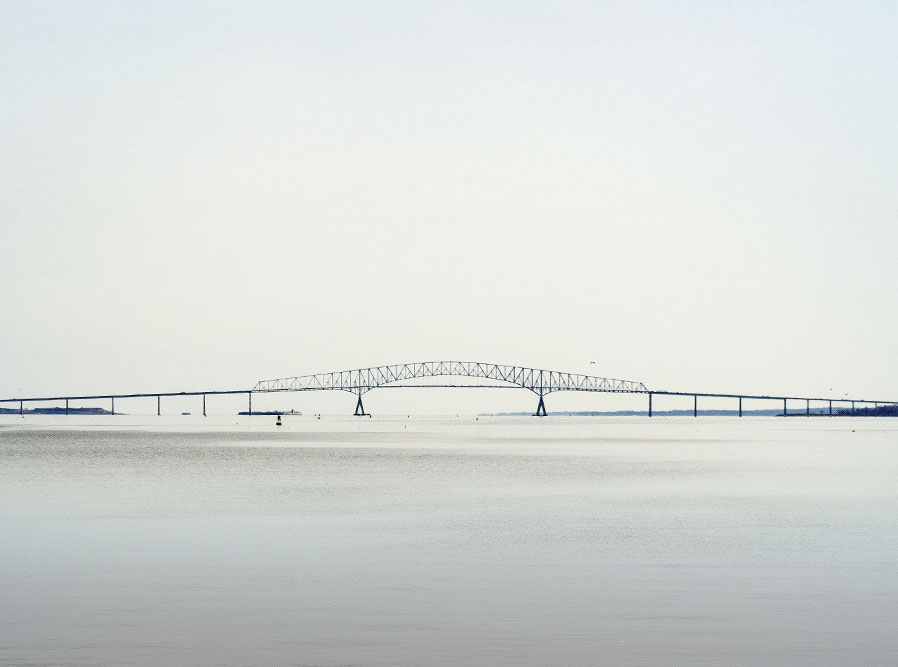
    Distant view of a truss bridge spanning a broad body of waterI have been thinking about metaphors to help explain structural editing. As the name suggests, this kind of editing aims to create a strong framework for your ideas. Poised between developmental editing and copyediting, its focus is on arranging the text in a way that is logistically and aesthetically pleasing.

    The first image that came to my mind to describe structural editing was the construction of a building. Certainly, there are some similarities between the two. Each begins with a wealth of raw material that must be assembled into an effective composition. Books, like buildings, need to be well made, with a design that reflects their purpose. They require solid foundations and easy navigation, and are at best functional, accessible and inviting. Ideally, both will also look and feel good when you’re in them.

    I was enjoying this little analogy when a friend mentioned the idea of a bridge. My imagination engaged in the implications of this image and I found that it too works well as a metaphor for structural editing.

    It is true that I don’t have the first clue about how to build bridges. What I can do, however, is structure a document so the ideas within it interlink to form an effective piece of textual architecture. This could, of course, be thought of as a building. But the bit that fits so neatly with the image of a bridge is the way it connects two points on a journey.

    Structural editing, as noted above, takes place between developmental editing and copyediting. More significantly, however, it is the process through which a chaotic collection of words transforms into a coherent manuscript.

    Structural editing bridges the distance between a rough draft and a refined document, enabling you to communicate more meaningfully with your reader.

    It also provides the firm footing upon which your readers may traverse your writing from beginning to end. Or, if you like, it is what lets them cross easily from one place to other.

    The practice of structural editing occurs when a text is still flexible and may be crafted into interesting new shapes. As with all forms of editing, it starts with attentive reading. There is a technique of seeking, almost sensing, patterns, recurrences and themes. Particular attention is paid to repetition, which may reveal the importance of a certain concept, or could highlight areas to consolidate, condense or cut.

    The skill lies in finding the best way, among many alternatives, to guide readers to their destination.

    When I edit this way, I often find one particular form or organising principle will emerge most strongly. Even so, I still see other possibilities and encourage myself to come up with more. I present all of these options to my client, who has the final responsibility for deciding what shape the work will take.

    Then, I make a plan. I assemble the elements. I begin to build.

    What may have started out as a provisional arrangement of materials can, through careful engineering, become a thing of grace. Picture the elegance of a suspension bridge, the sturdiness of a truss bridge, or the simple dignity of an arch bridge hewn from stone or wood.

    All of these allow travellers to venture from a place they know to somewhere as yet undiscovered.

    Your words, artfully structured, can do the same.

    Now it’s your turn…

    Have you ever had a document structurally edited? What was the experience like? And, just because I’m wondering, do you have a favourite type of bridge?

  • Copyediting and proofreading:
    Five things you should know

    The inky nib of a silver fountain pen writing on paperThe first thing you need to know is that copyediting and proofreading are not the same thing. While both focus on making your document as clear, consistent and free of errors as is humanly possible, they do so in different ways.

    The second thing you should know is that, done correctly, copyediting and proofreading happen at separate stages of the publication process. Technically, proofreading only occurs after a document has been copyedited and when it is fully formatted. It is the final step, prior to publication, when all the tiny details get checked.

    In practice, however, the boundaries between copyediting and proofreading are becoming increasingly muddy. A certain amount of proofreading is done these days when a manuscript is still in the form of a word processing document. This is not necessarily a problem, but nor is it quite what the practice of proofreading has traditionally been. That’s the third thing you should know.

    In my view, the distinction between copyediting and proofreading is found less in the format of the document and more in the approach to it. The simplest way to explain it is this:

    A copyeditor’s role is to suggest changes to a text, while a proofreader’s job is to correct it.

    As your copyeditor, I want your words to be as effective and poetic as possible. That means I will correct any mistakes I find in your grammar and punctuation, but I will also advise you about the tone and style of your writing. I will point out areas where your reader might get distracted or confused and will offer you options for addressing these.

    My way of working is to include you in this process. I respect your views and acknowledge that you are free to ignore my suggestions if you choose (even though they are made with the best interests of you and your readers in mind.)

    Proofreaders, in contrast, often have a more distant relationship with writers. Some who work in the publishing industry have no direct contact with the authors of the words they examine so scrupulously. Their task is not to ponder the writer’s wishes or intentions, nor to propose methods for embellishing the expression. Instead, the expertise of the proofreader is in identifying and correcting those inconspicuous but still existent errors and inconsistencies that can mar an otherwise exceptional document.

    With that in mind, it is advisable to accept any alterations made to your text by your proofreader. This is about technicalities, not taste. If a change has been made at the proofreading stage, it is because it was necessary.

    The fourth thing you should know about copyediting and proofreading is that I am happy to do either, according to your needs. Sometimes you might not know which is required and that’s ok. I can help you with this and provide examples if appropriate.

    Finally, it is worthwhile knowing who can benefit from a proofreader’s keen eye. Such fine folk include:

    • bloggers who are seeking to maintain a professional image by having someone check their posts for errors before they are published
    • entrepreneurs and website owners who send out email newsletters
    • creators of ebooks or online courses (because it is disappointing to find mistakes in material you’ve paid good money for)
    • artists who are applying for grants or access to exhibition spaces
    • fiction writers who have had their manuscripts copyedited and formatted prior to publication
    • non-fiction writers who have lots of headings, references, captions, figures and so on in their text
    • researchers and postgraduate students who are submitting articles for publication in journals
    • writers of all kinds whose attention to detail is less than ideal.

    Really, anyone who has written a document that is subject to the scrutiny of others could consider asking a proofreader to peruse their work. (And just so you know, that includes editors who write too.)

    There are, of course, many deeper mysteries to explore in the realms of copyediting and proofreading, and some of these will be covered in future articles. For now, I hope this brief guide has given you some idea of a few important features of these two related but different arts.

    Now it’s your turn…

    How do you understand the distinctions between copyediting and proofreading? What more would you like to know about the way each one works?

  • What you get from a manuscript appraisal

    An orange origami paper craneIt happens every time. Whenever a writer sends me a manuscript, I feel a delightful sense of anticipation. It’s like something potentially wonderful is in front of me and I’m eager to discover what I will make of it. This pleasure, however, is always measured by my need to read the document critically and analytically. I have to see what is working and what is not, to figure out how I can help.

    In most cases, the assistance I offer is editing, whether it be at copy, structural or developmental level. But sometimes a different kind of expertise is required. It could be that the text is not yet ready to be edited or that the writer is seeking an opinion or some assurance about the work, rather than wanting any alterations to it.

    That’s when a manuscript appraisal can be useful.

    A manuscript appraisal differs from editing work in that the focus is on providing an evaluation of the document without making any textual changes to it.

    Such appraisals will typically consider the effectiveness (or otherwise) of elements of the manuscript, such as the topic, structure, pacing, plot development, characterisation, narrative voice and writing style. It may also address the plausibility of the story and dialogue, and reflect upon the themes presented.

    Some manuscript assessments or appraisals will also include observations about market expectations and prospects for publication, although I am wary of offering such comments myself. The world of publishing can be a fickle thing and I do not want to give advice nor raise hopes that may be washed away in the wake of the next bright and shiny trend.

    Both fiction and non-fiction works can benefit from a manuscript appraisal. It is a step before editing that offers guidance for revising, reducing, reframing or expanding a document. That said, there is still significant work involved in appraising a manuscript, beginning with a careful reading of the entire document. This is followed by the preparation of a detailed report which contains practical advice and examples for reworking the draft.

    What you get from a manuscript appraisal, therefore, is the advantage of having a discerning reader for your work who is able to give insights into how you may improve it. You get a thoughtfully written report to assist with your revision, and you get the chance to refine your writing before embarking on the next stage of your journey.

    If that sounds useful to you, then say hello and let me know. I am, as always, happy to help if I can.

    Now it’s your turn…

    Have you ever had a manuscript assessed or appraised? How useful was it? What did you learn and what did you change?

  • The quirks of “while” or “whilst”

    "While" or "whilst"? Which do you favour?I confess. It’s true. Like you, I have my word quirks. There are those I use often because I’m fond of them (“nifty”, “tricky”, “expressive”, “poetic”) and many I use rarely because they don’t resonate with my voice.

    This is fine when I’m being a writer. I can choose and use whichever words I want. It’s another matter, however, when I am editing.

    A document I was recently working on contained numerous instances of the word “whilst”. My immediate inclination was to change all of these to “while” or to make gentle alterations to certain sentences so that neither word was necessary. There was arguably no need and no reason for me to do this, because the term “whilst” is not incorrect.

    Used as a conjunction, “whilst” carries exactly the same meaning as “while”.

    Even so, the tone of the two words differs.

    Most of us would bump into the word “while” more frequently each day than we realise. Yet the simple addition of the “-st” on the end turns it into a term that is more likely to catch our notice. It just sounds that little bit more formal or even old-fashioned.

    That’s fine if it is the writer’s intention. In general, however, the word “while” is probably preferable.

    It may be that this tendency to use “whilst” is a quirk of my client that I ought to have left unchanged in the text. Yet as an editor, I need to balance the voice of the writer with the purpose of the document and also keep in mind the needs of the reader. My distinct feeling in this case was that the extra attention the word “whilst” attracted was more distracting than deliberate and did not fit with the overall tone of the document.

    I made the changes accordingly and explained the reason for these to my client. I did leave one or two occurrences in place, though, partly to respect my client’s choice and also to add a touch of distinction here and there.

    I guess you could say I’m quirky that way.

    Now it’s your turn…

    Which do you favour – “while” or “whilst”? What differences do you see between the two? When would you use one rather than the other?

  • Why I need to see your work
    (and why it’s ok to show me)

    Detail of a girl's eyes from a vintage photographThis is how it goes.

    You write your document. You work away at it until you happily hit that final full stop. You take a breath. You let it go. You’re ready for the next step.

    You decide to get your work professionally edited. One way or another, you find me.

    Maybe a friend mentions my name or you glean my details from a list of freelance editors. You might click through various, curious links until you arrive at this website and fill in my contact form, or perhaps I slip you a business card when we meet at an event somewhere.

    However it happens, you find me and you send me a message. Chances are, it goes something like this… I’ve just finished writing my novel / PhD thesis / self-help book / website content / family history / entire life’s work. How much will it cost to edit?

    This is the point at which I will ask you, very politely, to please send me a sample of your work.

    Because without reading the actual words you want me to edit,
    I have no way of knowing how much it will cost.

    Your words are your own. They are unlike those that any other writer might compose. This means your manuscript is unique, and so the level of editing and time it requires cannot be determined by intuition or a formula. It can only be done by me giving it a decent read and due consideration.

    Some editors do quote for jobs on a per word or per page basis, while others might cite an hourly rate. That’s fine, but it is not my preferred approach.

    I am much happier knowing what your writing is like by having read it. Doing so allows me to get a better understanding of how I can help you and how much is involved – in terms of cost, time, complexity and effort – in giving you that assistance.

    Sometimes writers are reluctant to share their work, even when seeking a quote to have it edited. It is a delicate thing, I know, to send your words into the unknown hands of someone you’ve never met. Issues of trust and confidentiality can loom over such an exchange, not to mention that nagging question… What will she think of it?

    Let me reassure you.

    I read your work. I don’t judge it. And I keep all documents you send me safe and secure while they are in my care. I know how important they are.

    You need to feel confident that you can send your work to me and I need to see it so I can ensure the quote I give you to work on it is fair to both of us.

    The only way that can happen is if you let me read it first.

    Now it’s your turn…

    How do you feel about sharing your writing with other people? What prompts you to decide either to send it out into the world or not?

  • Developmental editing: What it is and why I love it

    New leaves of a hakea tree shown against a clear blue skyIf you have spent any time at all exploring this website (and I do invite you to do so), you will be among the clever few who already know there are different levels of editing. While I happily offer my services in structural or substantive editing as well as copyediting, I have a definite delight in doing developmental editing too.

    This kind of editing happens at an earlier stage in the writing process. It occurs closer to the spark that ignites the original idea, which means the words I’m working with when I edit developmentally are often in a more raw or tender form.

    Writers who approach me for assistance with developmental editing are excited by their projects and committed to their creation. Often, however, they have not yet found the precise shape or content for their concept. While they care deeply about their topic and the message they want to share, many find themselves getting tangled up in the complex possibilities of expression and composition.

    This is where developmental editing can help.

    As with other kinds of editing, the focus of this approach is on ensuring a writer’s voice and vision are made clear. Where developmental editing differs from structural editing or copyediting is that the editor is more intimately involved in the actual formation of the text.

    This can include things like helping you clarify your main point or purpose and devising a structure for its elaboration. Developmental editors may also propose new directions for you explore, based on either an early version of your manuscript or discussions about your topic. We can assist you with expanding your vision too, but it is just as likely that we will advise you on areas to reduce or exclude.

    Most importantly, a developmental editor will work with you to establish a plan for your writing and support you on your journey.

    Undertaking an effective developmental edit can be a daunting venture for editor and writer alike, yet it is an exciting one too. It is not always an easy procedure, nor is it a speedy one, but it can be incredibly valuable.

    The reasons why I enjoy developmental editing are many. There is the thrill of engaging with emerging ideas and the privilege of working so closely with writers. There’s the elation of sensing the rhythm that is hidden within the content, and the pleasure of guiding the writing into a cogent flow. Personally, I also relish the sincere satisfaction of turning a bundle of genuine but jumbled jottings into a comprehensible document with a compelling proposition.

    Creative and intuitive, challenging and rewarding, developmental editing is the means by which an idea becomes a manuscript. It is the process that allows me to help writers like you shape your unruly ideas and language into lucid, expressive and poetic texts.

    If you are curious about this kind of editing or want to discuss your project with me, please get in touch. It would be my pleasure to help you.

    Now it’s your turn…

    Have you had any experience with developmental editing? What was it like? How did it help you?

  • Finding the right editor for you

    Sharpened pencils in a row - so many colours to choose fromIt has taken a bit of time and a lot of effort. You’ve poured your devotion, attention and even your heart into writing your book, your thesis, your website, your poetry. Now at last it is finished.

    Almost.

    After all that dedication and occasional frustration, you know how important it is that your message is clear. That’s why you understand the next step is to employ the expertise of an editor who will check, correct and improve your written expression.

    But how do you find the right editor for you?

    If you are reading these words, you have already discovered this website. (Hello, by the way, and welcome. I’m so glad you’re here.) Perhaps you were referred to me by a friend or you found my details on the Editors Victoria freelance register. These are both great ways to locate an editor.

    Other options are to ask writers you know or admire for their recommendations or check the acknowledgements in books similar to the one you have written yourself. Authors often mention their editors here. You can also try using a search engine but your results might be a little mixed. Use detailed keywords and you may have better luck.

    Of course, finding an editor’s website or contact details is one thing. Working out whether or not that person will best meet your editing needs is a different and more delicate process. It is also exceptionally important.

    Any editor can improve your writing. But the right editor will make your experience enlightening, enjoyable and ultimately rewarding.

    To help you choose the right editor for you, here are some questions you might ask.

    • Does the editor have experience with your particular type of document or publication?
    • Are any areas of special interest or skill noted?
    • What do other people say about their experience of working with the editor, either through recommendations or testimonials?
    • How promptly does the editor respond to your initial email or phone call?
    • What is the tone of the editor’s communication with you (for example, brisk, informative, reassuring, casual, professional)?
    • Has the editor shown you a sample of work? Are you happy with it?
    • Is the editor able to complete the work you need within your preferred timeframe?
    • Has the nature and process of the editing been explained to you?
    • What level/s of editing does the editor do (for example, copyediting, structural editing, developmental editing)?
    • Does the cost of the work reflect the value you will receive?
    • Will the editor offer flexibility in your payment arrangements if necessary?
    • What sense do you get of the editor from a website or social media presence?
    • What feeling do you get from your interactions with the editor, either in person or online?

    This last question may seem somewhat vague but it is perhaps the most important of all, as each editor will have an approach that is both personal and particular. Where one may be firm and direct, another could be more intuitive and supportive. Neither is wrong, but nor would these different styles both be appropriate for the same writer or project.

    In my own work, I focus on being friendly and professional. I like to be thorough, which means I may not be as quick to finish your job as another editor. I tend to teach too. (Can’t help it.) This means I will often explain the suggestions I make and offer you more information about any issues I see recurring in your writing. Another aspect of my work is providing you with options to choose from. My belief is that you are responsible for your words, which is why you must make your own decisions about what you will do with them.

    This approach works for me but it may not suit you or the specific piece of writing for which you are seeking assistance. That’s fine. You can look for someone more aligned with your requirements using one of the methods mentioned above.

    The crucial point is this: a good engagement between writer and editor requires trust and patience on both sides. It is a subtle and sensitive relationship, so it is important you are happy with your choice.

    Finding the right editor may take you some time. But like your writing itself, it is worth the effort. In both cases, when it happens well, the outcome can be a truly beautiful thing.

    Now it’s your turn…

    What has been your experience of working with an editor? What do you look for in an editor? How do you discover and nourish those qualities?

  • Seeing what is there: How editing and art exhibitions are surprisingly alike

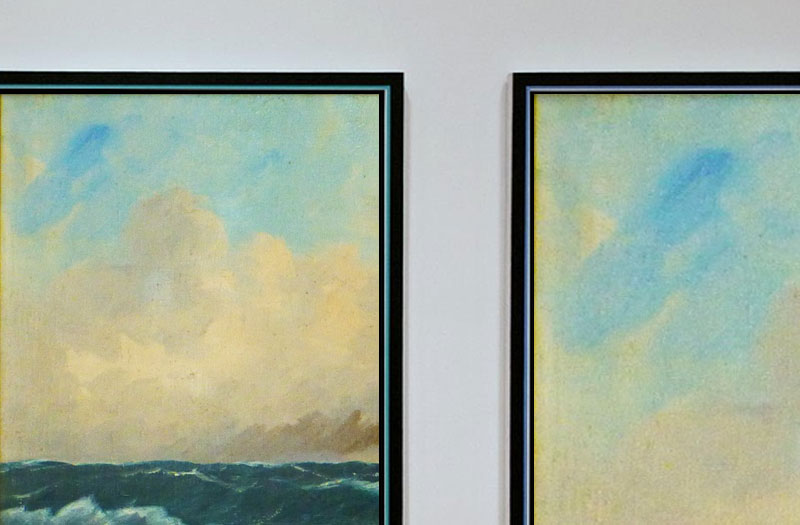
    Two paintings with the same scene of sea and sky in distant and detailed view
    At first glance, there might not seem to be much similarity between the practice of editing and the act of viewing an art exhibition, yet to my mind they are alike. Let me explain how.

    When I visit an exhibition, my first impression is of the space I am in. I become aware of dimensions, distances, shapes and shades. I identify whether the art is painting, photography, sculpture, drawing or some other interesting form and I reflect on the way the works are displayed. Are they grouped in close clusters or are there generous stretches between each? I give myself time to feel what it is like to be in the exhibition until something specific draws my eye.

    I’ll move towards that particular piece, noticing how it looks from across the room and how my sense of it changes as I approach. As before, I will begin by gaining an overall impression, taking in, for instance, the subject and scale. I may glance at the title or any notes appended alongside it, but by now the art has grasped my attention and I’m absorbed in my examination of it.

    Smaller details will present themselves to me, like the harmony of colours or one small but striking sliver of the image. I’ll become conscious of how various elements of the composition echo and reflect each other, sometimes providing balance while at other times inciting tension. It all contributes to the effect of the piece.

    Leaning in further, I’ll be drawn to explore distinct brushstrokes or textures. My gaze is now engaged and I am fascinated by what I can see in such close proximity. After a while, I’ll step back and regard the work again in its entirety. I may shift my position, choosing to view the art from a new angle. I’ll cross the floor and look it from a distance once more, only this time with an increased appreciation of how each tiny touch by the artist has created the eventual expression. By this time, I’m often smiling.

    Surprisingly – or perhaps not – it is the same with editing.

    When I’m gifted a new manuscript to work with, I begin by obtaining the same initial impression of scope and shape. I look into the form and content of the writing, as well as its mood and tone. As I read, I let the voice of the piece reach me and I find myself leaning towards it. The deeper I get into the text, the clearer my sense of its structure becomes. I can see how each section works and discern the purpose in every paragraph.

    I consider individual sentences and words, noting marks of punctuation and even the spaces between symbols. I appraise the role that all of these play and the contribution they each make.

    Throughout this process, as happens in a gallery, my perspective is constantly shifting. It moves from a close focus to take in the bigger picture before gliding back again to centre on a certain detail or to contemplate the overall flow. I am mindful always of the relationships between different elements of the text and how they blend together to generate the desired effect.

    Again, by this stage, often I’m smiling. But I am also attentive, sliding into the writing itself, making deft alterations, settling any ruffles, always ensuring the words are accurate as well as artful.

    It’s a delicate process, and a deliberate one too. In both cases, I find it delightful.

    Whether my view is precise or expansive, and whether I’m absorbed by art or by words, it is all about seeing, appreciating and admiring what is in front of me.

    Now it’s your turn…

    How do you view art exhibitions? Are there any similarities between how you approach art and how you view other activities in your life?

  • The three things editors see (and why you need our expertise)

    The three things editors see (and why you need our expertise)

    View of the sky, looking up through the trees.Writers of all kinds are often advised to have someone look at their work before they publish it, post it, submit it or otherwise share it. Such readers are typically colleagues or friends who can spot a missing word or fix a misplaced piece of punctuation.

    For documents that really matter, however, it is best to engage a professional editor. Based on our expertise, there are three things that editors see which a more casual reviewer will not.

    1. Editors see what is there

    We read your words. Every one of them. More than once. We do this carefully, even scrupulously. We note the content of your document. We see its scope and shape. We observe its complexity and texture. We go further, discerning patterns and repetitions, recognising rhythms and inconsistencies.

    We perceive the meaning you aim to convey and assess how well you have achieved this. We engage with your turn of phrase. We enjoy your use of metaphor but we are also attuned to your grammatical quirks. We detect those regular errors you make that can distract your reader and dent your expression. (Fortunately, we know exactly how to address those. It’s all part of our brilliance. Also our charm.)

    Most of all, we see – and believe me, we appreciate – the effort and dedication you have put into your work. We see it and we respect it. That’s why we give your words the care they deserve.

    Yet this is just the beginning.

    2. Editors see is what is not there
    It might be as simple as a subheading or as necessary as an explanation. Maybe it’s a definition that will make clear your use of a certain term, or a lively example to illustrate the point you are making. Perhaps your character needs a bit more backstory to reveal more clearly why she acts in the way she does. Or it could be that you need to be a little more generous with your commas, or include a few additional transition signals to guide your reader easily from one idea to the next.

    Whatever is missing from your text and is diminishing the effectiveness your message, we will see.

    We know good writing. We know how it works. We can tell if your words are behaving at their best and can identify what is lacking when they’re not. We know what to do to improve them.

    But even that’s not all.

    3. Editors see what could be there
    This is where the magic happens. This is your editor’s gift.

    It’s the ability to envision just how good, indeed how very much better your writing could be. It’s the belief that your words and your message are important enough to resound more meaningfully.

    From our appraisal of what appears in your writing and what is absent from it, we know and can show you how to reach that level of excellence.

    Sometimes the slightest adjustment is all that is required. Other times, our skill lies in finding the gem in the midst of the mess and holding it close while transforming the rest.

    We can see what your words can achieve even when you can’t. And we are more than happy to show you.

    These three kinds of insight set professional editors apart from all your other readers. They enable us to distinguish writing that is good enough from writing that truly shines. If your words matter, having them professionally edited does too. Want to see the difference?

    Now it’s your turn…

    Have you worked with a professional editor? What insight did that editor bring to your writing?

  • From a distance of 2.54cm

    From a distance of 2.54cm

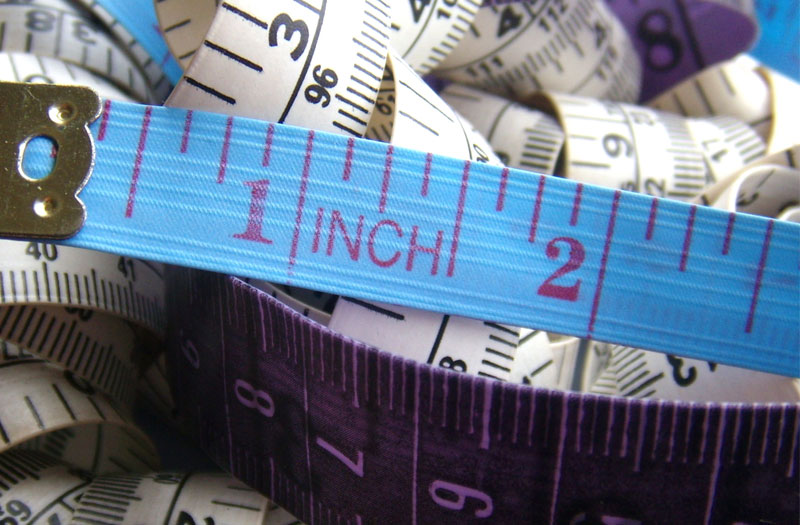
    A jumble of blue, white and purple tape measuresI heard an interesting phrase the other day and it’s been gliding around in my mind ever since. It was in a TED talk delivered by Elizabeth Gilbert. You know, the one who wrote Eat Pray Love.

    As it happens, she wasn’t talking about eating, praying or loving. Rather, her topic was creativity, and in particular the correlation so often and so effortlessly made between artistry and anguish. She asked her audience if they were ok with the idea that creativity and suffering are inextricably linked. She invited them to consider that notion, even from an inch away.

    Even from an inch away.

    That’s the phrase I’ve been contemplating.

    It is not that it’s an especially new idea. Nor is its expression in any way astonishing – although it’s true Liz Gilbert does have a lovely way of saying things. Nevertheless, for some reason it resonated with me and perhaps it will with you too.

    An inch is not big. It’s 2.54 centimetres. Really not far at all. Even so, it can sometimes be difficult for us to shift even that small distance. And that’s a shame, because we all need to be able to view things anew.

    The view of artists that Elizabeth Gilbert encouraged her listeners to examine, even from an inch away, is a troubling one. Yet implicit in her invitation lies a hint of liberation. For even the small distance of an inch affords space to observe and examine, to literally re-view a circumstance or situation, and thus to embrace a different outlook.

    This potential exists in many areas of our lives. It applies to our writing too.

    Sometimes the words we write are so precious to us, we see only how they glisten and not where they are flawed. Other times we wrestle so fiercely with forcing our ideas into language that we forget they need room to breathe.

    In both cases, the ability to shift our perspective even a little is critical. Doing so may be as simple as setting your writing aside for a few days before revisiting and revising it. However, it can also be as demanding as questioning your topic, your writing process, your ability, and even your beliefs.

    Editors and proofreaders intrinsically bring a professional distance to your text. It’s why we’re able to see what is vital in your writing and to smooth it so it flows. It’s how we spot the errors your brain persuades you are not there. (Also, we have superpowers. We’re handy that way.)

    Whether the landscape you look upon is your own writing, a daily routine or some broader cultural assumption, it can be worthwhile trying to find even a small distance from which to reconsider it.

    And if you’re struggling to shift your vision even an inch from your writing, you can always let me know.

    Me and my superpowers are happy to help.

    Now it’s your turn…

    Do you have any techniques you use to help you shift your view? What have you observed about viewing your writing even from a small distance away?