Tag: improving your writing

  • The importance of crafting your written expression

    A collected of empty wooden picture frames, painted in a range of colours, leaning up against each other.It happened in an art gallery. Of course. Amid the burble of opening night chatter, surrounded by inspiring artwork, an idea arrived surprisingly in my mind.

    “I could start a business,” I thought. “I’ll call it Artful Words.”

    So I did.

    Deciding on a tagline for my business, however, wasn’t so intuitive. I had to go looking for one. I sifted through a variety of phrases. They were mostly awkward, lumpy things. Yet when the words “crafting your written expression” came to me, I knew that they were right.

    I like the pleasant resonance between “artful” and “crafting”. I appreciate the way these two terms allude to a view of writing, editing and proofreading as activities involving both art and craft.

    More than this, the phrase states what I will do for you and what I hope to help you do for yourself.

    It affirms the value I hold in being careful and intentional with your words.

    I’m not saying it’s easy, though.

    Crafting your written expression requires time and attention. You need a clear understanding of your purpose and a willingness to keep reviewing and improving your writing. This includes cleverly selecting which terms to use, noting their rhythm and tone. It means meticulously reading each line and excising whatever is unnecessary, even if it stings a little to cut it out.

    When you craft your written expression, you demonstrate respect for your reader and yourself as a writer. Through such crafting, you consciously cultivate your insight and skill, developing your technique through repetition and devotion. Your aim may be to make art. But ultimately, you craft your writing because it matters.

    You do it because it can be better. Because it will be better. Because you make it better.

    Perhaps not all your words need to be so finely wrought. However, any writing that aims to sway or persuade, that aspires to enchant or impress, that seeks meaningfully to tell a story or share an idea will always be more vibrant when both art and craft mingle in its composition.

    At the core of my business is a desire to help you communicate your ideas more elegantly and effectively. In that way, “crafting your written expression” is more than just a tagline. It’s an articulation of the way I work with your words, using expertise, insight, precision and care.

    That is what you can expect – and what you will get – from Artful Words.

    It’s something I believe you can expect and achieve for yourself too.

    Now it’s your turn…

    What craft do you practice? What art do you make? How do you view the interplay between the two?

    Photo by Jessica Ruscello on Unsplash
  • New year’s advice for writers

    New year’s advice for writers

    "Just write every day of your life. Read intensely. Then see what happens." - Ray BradburyI’m not really one for making new year’s resolutions. I don’t see the point. If you’re hoping to change your habits, your activities or the whole glorious jumble of your life, why wait until 1 January?
    Even so, I can’t help finding the optimism of a new year enticing. There’s that delicious feeling that this is the year you will get it right. You’ll figure it out – the system, the magic, the knack. The trick to keeping everything beautiful and smooth.

    It doesn’t matter that you thought the same thing last year, or the year before that, or even (since we’re being honest here) the one before that. Nor is it important that while you’re envisioning a life brimming with grace and ease, you remain entirely aware that it’s not going to work out that way.

    New years are about beginnings, however wishful, and I’m all in favour of that.

    Perhaps this brightly shining new year is the one in which you will finally commit to writing that book. Or maybe 2014 will see you complete that project which has absorbed your time and your mind for so long.

    If you have a resolute nature and a desire to write, you might try taking Ray Bradbury’s advice. Writing daily and reading fervently are two excellent ways to spend your days or nights in the coming year. And while delightful activities in themselves, they are also highly likely to make you a better writer. Perhaps even a better human being.

    Grasp the optimism of the new year and give it a go. Then, as Bradbury says, see what happens.

    My own reservations about resolutions do not stop me from making a wish for the year ahead. That wish is to assist you in whatever way I can to find the art in your words and to craft your written expression.

    Artful Words is open for business in 2014.

    Tell me how I can help you.

    Now it’s your turn…

    Do you make new year’s resolutions? Care to share? What do you resolve to create this year?

  • An inspiring and beguiling writing tool (or why the Rogetsthesarus is my favourite dinosaur)

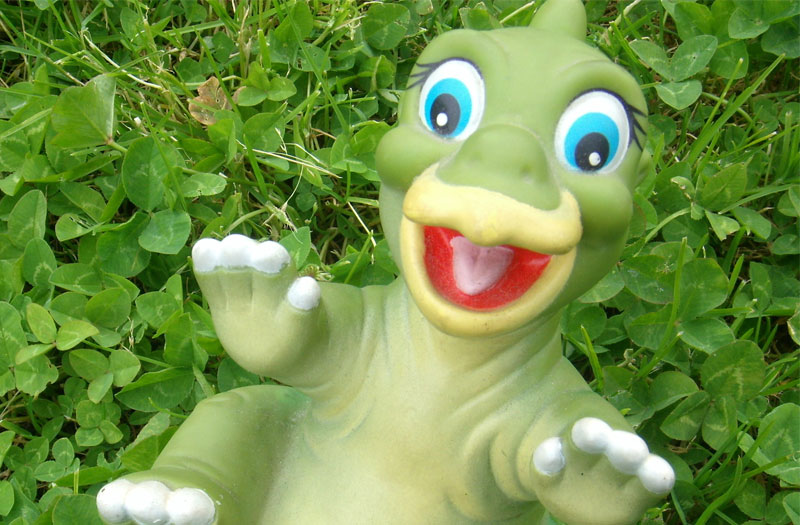
    Picture of a toy dinosaur with a happy smile. It's a rogetsthesarus... get it?I choose my words carefully. It’s what I do. Whether I’m writing for a client, for publication or for my own inclination, I consider the words I use. I weigh each one in my mind, always aspiring to delight as well as enlighten my reader.

    I could pretend these words ripple easily from me in a swirl of intrinsic brilliance, but writing like this takes effort. Not only that, it requires tools. And the one I reach for most when I write is the humble but judicious, inspiring and beguiling thesaurus.

    It has become an instinctive part of my writing rhythm to use a thesaurus. I’ll be happily tapping away at my keyboard, tracing a thread of thought, when I will arrive at an idea for which I don’t quite have the right word. Without conscious direction, my fingers will flicker to a particular combination of keys and the thesaurus will appear.

    And that’s when the fun begins.

    Yes, it’s true. I do find it fun to drift through lists of synonyms, sifting their differing meanings, seeking the one that shines. You feel the same way. Right?

    I’m not always sure what I’m looking for as I scan through alternative terms, but I know the right word when I see it. Sometimes it’s about the way it sounds in the overall flow of the sentence. Other times a certain word will conjure up a visual image that aptly captures the message I’m sending. Usually the chase involves appraising subtle shades of connotation.

    Consider, for instance, the distinction between “modification” and “variance”, or “discrepancy” and “diversity”. All are synonyms for the word “difference”, yet each offers a shifting glimpse into what difference is all about.

    Becoming attuned to these nuances and discovering new words to use enhances our ability to truly mean what we say. Thus, the rewards of the thesaurus are not to be found in picking the most pretentious term in an effort to impress your reader. Rather, they exist in the capacity to intentionally select the best words for your purpose.

    For this reason, it doesn’t matter if the thesaurus you use is online, in-built, a battered paperback or some swanky app. It makes no difference – or indeed variance – if you prefer to consult Collins, Roget’s or the Macquarie.

    What is important is that a thesaurus is an excellent tool to improve your communication. It can give your language potency. It may also grant it poetry.

    I choose my words carefully but I also choose them joyfully. I take pleasure and pride in finding words that can carry my meaning while simultaneously elevating the imagination.

    I choose words astutely and I choose them jubilantly. I choose them exuberantly, and yes, I choose them artfully too. Do you?

    Now it’s your turn…

    Do you use a thesaurus when you write? What kind? What wonderful words have you found on your travels? Share your thesaurus stories below.

    (By the way, you do get the dinosaur joke, don’t you? Roget’s Thesaurus. Rogetsthe-saurus. The most eloquent of all the dinosaurs.)

  • Murder, unkindness and storytelling

    Murder, unkindness and storytelling

    A murderous looking raven, who no doubt has a story to tell, glaring right at you.It began with ravens. A flurry of birds, persons and other wondrous beasties hurried thereafter. But it did begin with ravens. I read an interesting article about these sleek creatures and it led me to wonder. I was familiar with the expression “a murder of crows”, but what was the collective noun for ravens?

    Turns out, it is also a murder of ravens, as well as an “unkindness” which equally applies to crows. But it was a third collective noun for ravens that really caught my attention. This was a “storytelling”. And at that point, my mind lifted its wings, flapped them a few times and went soaring off into the skies.

    A storytelling of ravens. Isn’t that fabulous?

    It’s almost a small story in itself. In just four words, a surprising world is glimpsed. You can picture the birds, gathered blackly on the grass, cawing their ravenish tales. What stories do you imagine they’d tell?

    Off now on a jaunt, I started seeking out other collective nouns that offered equally intriguing impressions. And believe me, there are many!

    Bears come in sleuths or sloths – perhaps depending on the season and how sleepy they’re feeling. It’s a passel of possums and a kettle of hawks, a pod of pelicans and a knot of frogs.     An aurora of polar bears is nice, not least because it’s fun to say. I quite like a charm of hummingbirds, but it worries me that it’s also a “troubling” of them. Surely a “tremoring” or a “shimmering” would be more apt?

    Even hermits get their own collective noun, as paradoxical as that sounds. Should you ever happen upon a gathering of them, please note that it’s an observance of hermits.

    Some among these nifty nouns are considered to be official, in that they were written down centuries ago. Many of them show a distinct linguistic delight in their contrivance, just as those devised today do. It really is a fascination of boars, though I’m not so sure about a platter of platypuses. As for a committee of vultures… Well, I’m sure we can all understand that one.

    Entertaining as these explorations are in themselves, the realm of collective nouns in fact contains some valuable insights for aspiring writers.

    First, there’s the pleasure of encountering such rarely heard words as “gam” (of whales), “skirl” (of pipers) and “clew” (of worms). Sure, you may not find a use for these neglected treasures in everyday conversation, but isn’t your vocabulary improved by their inclusion?

    Next, there’s the rhetorical contrivance of collective nouns, many of which play around with alliteration, assonance and onomatopoeia. Not for nothing is it an armoury of aardvarks, a litter of kittens and a crash of rhinoceroses. The play of sounds in collective nouns is part of what makes them engaging and memorable. The same can be true of your writing too.

    Then there’s the condensed richness of the image. The juxtaposition of the collective noun with the object it describes can be poetic, provocative, or purely incongruous. (Why, I can’t help wondering, is it a “troop” of mushrooms? And how on earth can it be a “walk” of snails?) In any case, an effective collective noun is an evocative gem.

    Tighter than a haiku, it compels precision. It’s an exercise in finding that one right word which most potently and appropriately expresses some essential quality of the collection in question. And isn’t divining such perfectly pertinent words what the best writers successfully do?

    This leads us to the greatest gift that collective nouns bestow, which is the ingenious joy in inventing your own. This particular party trick invites you to employ all your wit and skill with language to find that artfully astute term which captures an essence and conveys a whole story.

    Messing around with collective nouns may seem like nothing more than an agreeable indulgence. But actually, it shows language at use in a deliberate and considered way. As such, it can be quite instructive, as well as being both amusing and diverting.

    Oh, and just in case you were wondering. The collective noun for writers? That would be a “worship”. Of course.

    Now it’s your turn…

    What’s your favourite collective noun? It can be official, idiosyncratic or entirely imaginary. Or, what throng of things do you believe is in need of an inventive collective noun? Share your cleverness below.

    Photo credit: That murderous looking raven (no doubt with a story or two to tell) was snapped by neeravbhatt and is used here via photopin under a Creative Commons licence.